Parent coaching and direct support address related but different parts of a young person’s situation. Parents may need help understanding what is happening at home, while the young person needs a relationship, an opportunity, or assistance with an action outside the family.
JADA’s approach brings these forms of support together. It does not assume that changing parental responses automatically completes the young person’s support, or that working with the young person makes family circumstances irrelevant.
Make the responsibilities visible
A useful support plan identifies who works with the parents, who engages directly with the young person, and how progress will be reviewed. Families should be able to distinguish advice about home life from an actual arrangement for practical help.
Questions can be specific: who will attend a visit, explain a learning option, accompany an agreed activity, or help prepare for an application? A plan becomes more reviewable when responsibilities and next steps are clear.
An example with two named practitioners
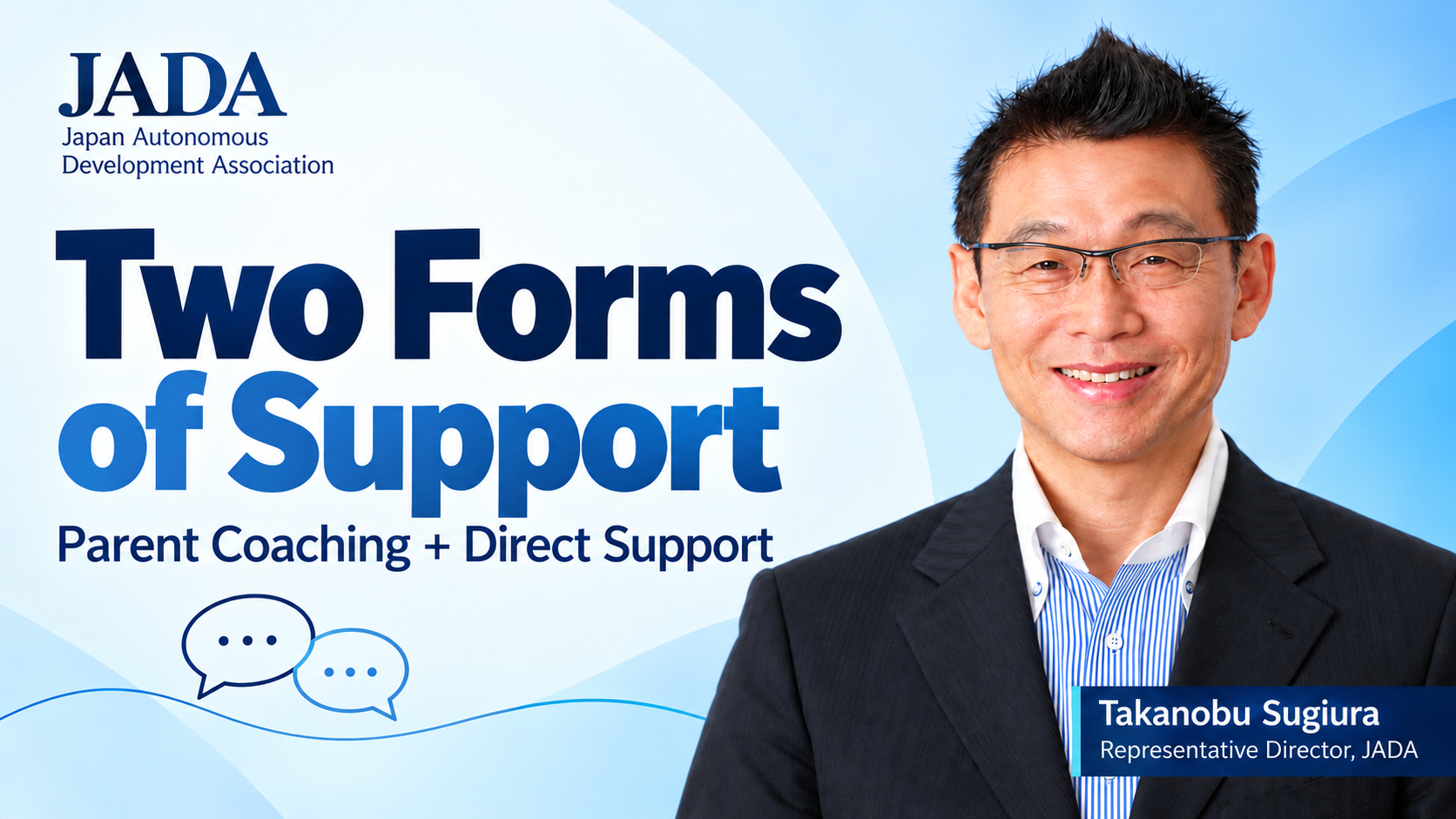
In CASE21, K’s transfer did not immediately stabilize attendance. Seiya Okura continued home visits, relationship-building, attendance support, and career guidance. Takanobu Sugiura met the father monthly to discuss interactions at home, the parent-child relationship, and future pathways. K later graduated and joined LEC Tokyo Legal Mind as a regular employee.
The point is the documented division of work, not a claim that two named roles always produce the same outcome. The case record does not provide every meeting note or a standard duration for another family.
Coaching is a space to consider responses
Parents can bring observations and questions without being asked to diagnose the young person. A discussion may clarify what is known, what remains uncertain, and which responses caregivers can coordinate.
Support should not turn this into an assignment to control every part of another person’s day. It should leave room for the young person’s choices and for direct contact with someone outside the family where appropriate.
Direct support needs an agreed purpose
An activity is not useful merely because it occurs outside home. Discuss its purpose, the person’s willingness, what help is available, and how to adapt if it is too demanding. Practical support can then be reviewed in relation to an actual experience rather than an abstract expectation.
The respective roles can change over time. A family may need a different level of contact as circumstances change. Regular review is more informative than assuming that the first plan remains suitable indefinitely.
Listen to a parent’s perspective
The related discussion below features the mother of S (CASE06), Seiya Okura, and Takanobu Sugiura. It is parental testimony and supporter reflection, not an interview with S and not a recording of CASE21.
Video language: Japanese; English subtitles have not been verified. Descriptive label: A mother and supporters reflect on S’s pathway from withdrawal to work. Publication date: October 4, 2026. Duration: 15 minutes 48 seconds. Publisher: JADA’s official Japanese-language channel, as described by the Japanese case article. Current YouTube title and channel display name have not been independently checked.
Watch the discussion on YouTube (Japanese). The written account of S’s case (Japanese) distinguishes this discussion from other recordings.
The framework and the people involved
JADA provides consultation, assessment, parent coaching, and comprehensive planning. Kousotsu Shienkai provides direct educational and practical support. Actual practitioners should be identified from the relevant record.
The 5-Stage Assessment within Autonomy Stage OS is a support framework, not a medical diagnosis. The 7 Steps to Autonomy guide support toward Social Autonomy without imposing one order or timetable on everyone.
Questions families can ask
Can parents begin a consultation on their own?
They can ask a provider about discussing the situation first. That does not authorize unexpected contact with the young person. Any proposed direct engagement needs its own appropriate planning.
Must both forms of support look the same in every case?
No. The purpose is complementary support, not a fixed package. Ask what each person will do and how the plan responds to the individual situation.
How can we tell whether a plan is becoming practical?
Look for a defined purpose, a responsible person, an agreed next action, and a review point. Completion of a consultation is different from the start of actual support.
Before the next consultation
- Note current routines and contact outside the family without interrogating the young person.
- Write down what parents need help understanding.
- Ask who will work directly with the young person and what that work involves.
- Agree on when and how the plan will be reviewed.
Read JADA Support Philosophy and CASE21 (Japanese). For professional exchange about coordinating support, contact JADA.