JADA Official Statement
A Proposal toJapan & the World
Presented by
Japan Autonomous Development Association (JADA)
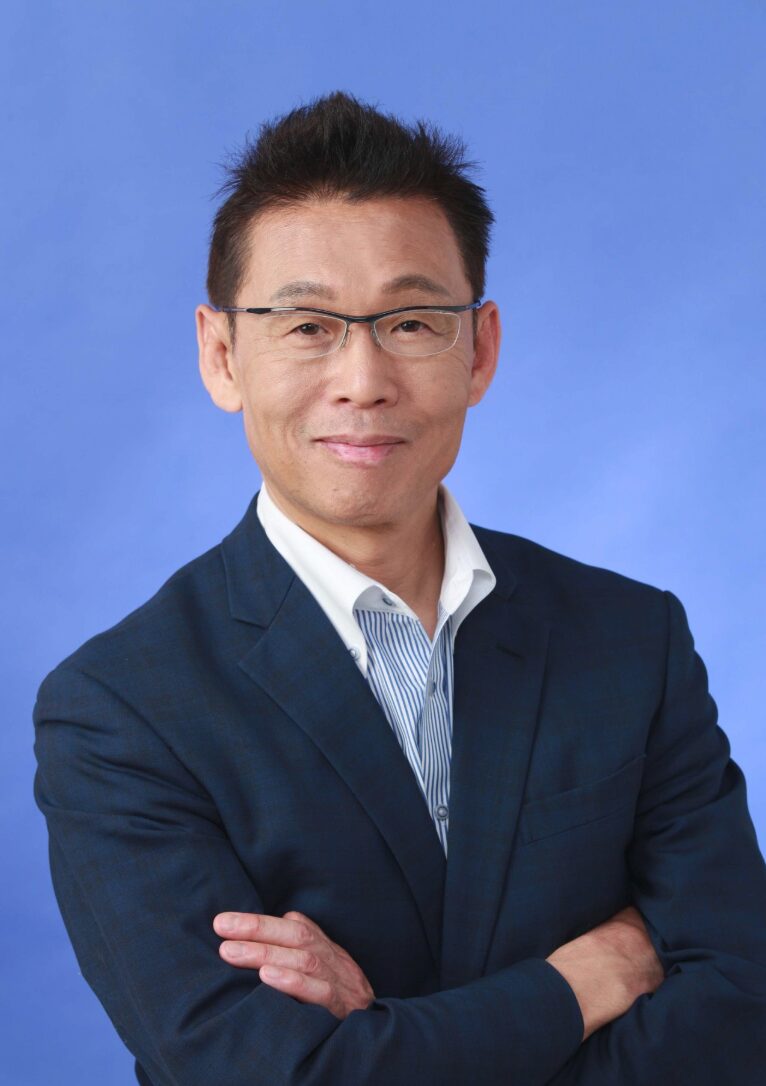
Representative DirectorTakanobu Sugiura
353,970
elementary and junior high school students not attending school in FY2024
A record high, up for the 12th consecutive year as of FY2024. Source: MEXT survey, FY2024
1.46M
people aged 15 to 64 in social withdrawal (hikikomori)
Estimate for Japan. Source: Cabinet Office survey, FY2022
135,724
elementary and junior high school students not attending school who received no specialized consultation or guidance inside or outside school
FY2024. Source: MEXT survey, FY2024
Preamble
Raising children as “future taxpayers”
Reach out to the families that support has not yet reached — before isolation becomes prolonged.
In FY2024, 353,970 elementary and junior high school students in Japan were not attending school — a record high and the 12th consecutive annual increase (MEXT). Of these students, 135,724 received no specialized consultation or guidance from any institution inside or outside school. In addition, an estimated 1.46 million people aged 15 to 64 in Japan are in social withdrawal (hikikomori) (Cabinet Office, FY2022 survey).
Behind these numbers are many families that no support has yet reached. When a child stays at home and the family is left to “wait and see,” isolation can continue for years. We therefore propose that support should actively reach out to these families — before isolation becomes prolonged.
In April 2026, our organization, formerly Futoko Hikikomori Yobo Kyokai, became the Japan Autonomous Development Association (JADA). Drawing on more than 40 years of practice, support for more than 10,000 people, and the 90%+ resolution record that JADA reports (see Evidence), we propose the following reforms.
Chapter
1Support that reaches out early
Many families in Japan are not yet connected to specialized support. We propose that support should not wait for them to ask for help, but should reach out to them early.
What reaching out early looks like
Japan today
In FY2024, 135,724 elementary and junior high school students who were not attending school received no specialized consultation or guidance from any institution inside or outside school (MEXT).
European Union
Under the reinforced Youth Guarantee, EU countries have committed to ensure that all young people under 30 receive a good-quality offer of employment, continued education, an apprenticeship, or a traineeship within four months of becoming unemployed or leaving education (European Commission).
When families are left to wait alone, withdrawal can persist for many years as parents grow older — a situation Japan calls the “8050 problem.”
Chapter
2From waiting to “active support”: JADA’s proposal
“Waiting for the young person to decide” only postpones resolution. The case of Y — who experienced social withdrawal for ten years, received support from JADA Representative Director Takanobu Sugiura, and now works as a nursery teacher in public service — shows that what is needed is “appropriate intervention.” (Case 1, Success Hub)
ProposalsOur Proposals to Japan
- No.01Public funding for outreach to families:
Make “active outreach” the standard — specialists (JPCs) who visit the home, reach families that support has not yet reached, and help them move forward after a long standstill.
- No.02Ongoing public support for support schools:
For support schools that help students enrolled in correspondence high schools, ensure full eligibility for discounted student commuter passes and provide tuition assistance, so that economic gaps do not become “autonomy gaps.”
- No.03Evaluation by outcomes toward Social Autonomy:
Do not stop at providing a place to belong. Evaluate support organizations by outcomes that lead toward Social Autonomy: stable daily life, a return to learning, further education or employment, and continued participation in society. Becoming a taxpayer is one part of this path, as the young person comes to contribute to society as an autonomous person.
- No.04Government recognition of the JPC (JADA-Certified Autonomy Parents Coach) qualification:
We call for the mandatory placement of JPCs in local government consultation services nationwide and in school counselor roles, and for formal government recognition of the JPC qualification.
Chapter
3The 7 Steps to Autonomy
The Autonomy Stage OS is JADA’s core support framework. Within it, the 5-Stage Assessment is the assessment framework we use to understand where the young person and the family currently stand. Our support philosophy is Parent Coaching × Direct Support for the Young Person. The 7 Steps to Autonomy put these into practice, with Social Autonomy as the final goal. Not everyone receives the same support in the same order.
- STEP1
Parent Coaching & Stage Assessment
Using the 5-Stage Assessment, we understand where the family stands, and parents decide to take an active part in support.
- STEP2
Outreach (home visits)
Through home visits, certified JPC specialists build relationships with the young person and the family, and decide together on the next step suited to the situation.
- STEP3
Lifestyle Improvement & Environmental Adjustment
Living with others in camps or dormitories corrects day–night reversal and builds the rhythm needed for life in society.
- STEP4
Learning Support
Catching up on studies restores the confidence that “I can do it, too.”
- STEP5
Building Social Connections
JPCs go along to exams and interviews and ease anxiety on the spot.
- STEP6
Pathway & Social Participation Support
Through part-time work and more, young people experience the joy of being needed by others.
- STEP7
Social Autonomy (the final goal)
Young people lead their own lives and contribute to society as autonomous people — as doctors, teachers, public servants, entrepreneurs, and in many other roles. Paying taxes is one part of that contribution.
Chapter
4JADA’s own work toward these proposals
What follows is not what we ask of the government, but what JADA itself will carry forward.
Japan
Partnerships with correspondence high schools
By combining the 5-Stage Assessment before enrollment with home visits and lifestyle improvement camps, we will expand partnerships with correspondence high schools so that students not only earn a high school diploma but also develop the autonomy to thrive in society.
International
From Japan’s model of resolution to a shared global challenge
Already under way
- A Traditional Chinese edition of Takanobu Sugiura’s book, 拒學,不要搶救 (bibliographic record), was published in Taiwan with named endorsements from psychiatrists, clinical psychologists, university professors, and parent-education specialists. It was also listed as a reference book on hikikomori (繭居) and school refusal (拒學) in the discussion handbook for “深居繭出,” a March 2022 event of Taiwan’s Youth Good Governance “Let’s Talk” program (青年好政 Let’s Talk), for which the Youth Development Administration of Taiwan’s Ministry of Education is named as the guiding agency (discussion handbook, p. 25).
- Sharing our work in English through JADA Global
What we aim for
- We aim to obtain Special Consultative Status with the UN Economic and Social Council (ECOSOC). We have not yet obtained this status. Once obtained, it would allow us to participate in eligible UN meetings and to submit statements in accordance with the prescribed procedures.
- Through work directly linked to SDG 4 (Quality Education) and SDG 8 (Decent Work and Economic Growth), we will strengthen our ability to make proposals on education and welfare policy in other countries.
- Step by step, a multilingual Success Hub that publishes our cases and evidence, joint research with universities, research institutions, and NGOs abroad, and pilot programs on the ground in Asian cities will lead toward Social Autonomy as an international standard.
- Joint Research with Universities, Research Institutions, and NGOs
We aim to work with universities, research institutions, and NGOs abroad, mainly in Asia, to jointly study the process from school refusal and hikikomori to Social Autonomy. Drawing on cases and support records from the JADA Success Hub, we will examine how Parent Coaching and Direct Support for the Young Person lead to stability in daily life, a return to learning, and employment and social participation. We will apply what the research shows to pilot programs with local partners and to improving our methods of support.Inquire About Research Collaboration
- 1Obtain ECOSOC Special Consultative Status
- 2Establish international credibility
- 3Internationalize our evidence (multilingual Success Hub)
- 4Joint Research with Universities, Research Institutions, and NGOs
- 5Collaboration with international foundations and companies
- 6Secure impact funding and overseas grants
- 7Pilot programs in Asia
Multilingual Success HubJoint researchPilot programs on the ground
GoalSocial Autonomy as an international standard
Chapter
5The evidence behind these proposals
The evidence for our results is set out on “The 90%+ Resolution Record” page, and our success stories on the JADA Success Hub.


Conclusion
Will we let the word “hikikomori” end as Japan’s shame? Or will Japan offer a model of resolution for a challenge shared across East Asia? Now is the time for government, education, and the private sector to come together and shift to “active support.”
April 1, 2026 (revised November 9, 2026)
Japan Autonomous Development Association (JADA)
(formerly Futoko Hikikomori Yobo Kyokai)
Online petition (in Japanese)
Support this proposal