School refusal camp support is easier to understand when we ask what happens before, during, and after the trip. A camp may offer shared routines and contact with other people. Its value for a particular young person depends on preparation, the support offered, and what can continue at home.
The goal is not to collect an impressive experience for its own sake. It is to explore whether the setting gives the person a supported opportunity to participate, reflect, and express something they want to try.
Ask what the proposed camp actually involves
Before a decision, request a clear description of the day, the activities, and the staff available. Discuss travel, sleeping arrangements, ways to raise a concern, and what happens if an activity is difficult.
Explain the proposal to the young person in terms they can understand. A family’s hope for change should not be presented as the young person’s agreement. Ask what information the person wants before considering participation, and what alternatives may be appropriate.
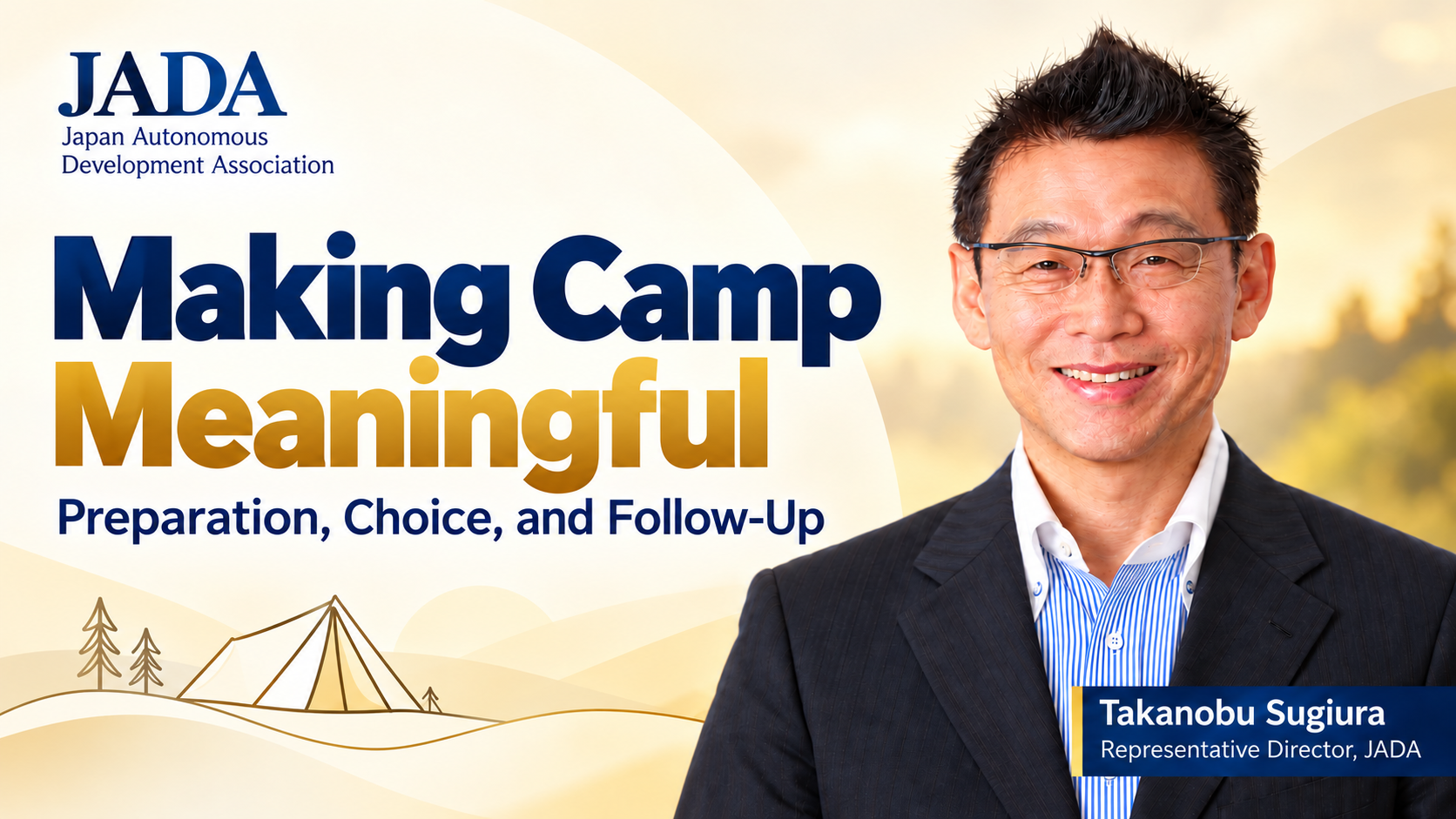
Watch the related JADA Global video
The discussion describes staff accompanying daily routines, setting phones aside during activities, and writing a personal mission statement. A high school student then describes his wish to learn languages, work overseas, and give back to his parents. These are a staff account and a student’s stated ambitions; the recording does not show that those future plans have already been achieved.
Video: School refusal Support: Building Daily Routines and Personal Goals at Camp
Channel: JADA Global. YouTube publication date: 2026-10-29. Speakers: Takanobu Sugiura, a Kousotsu Shienkai staff member, and a high school student.
Japanese-language content. The title and public description are in English. An English introduction is provided above; English audio and subtitles have not been verified. Publication on YouTube does not establish the date of the original recording.
Make rules understandable before arrival
The recording’s phone arrangement belongs to the camp being described. It is not a universal instruction to confiscate a young person’s phone. Families should ask how any activity rules are explained, what contact remains possible, and how individual needs are considered.
A rule is more useful to discuss when its purpose and practical consequences are clear. Who holds a device, when is it returned, and how can a participant contact family? Ask for the actual arrangement rather than assuming that every camp operates alike.
Leave room for a goal that is still developing
A personal mission statement can open a conversation about interests. It should not become a requirement to announce a complete life plan. The student in the related video expresses his own aspirations; another participant may have a smaller or very different question.
A useful reflection might concern an activity the person would like to repeat, someone they could ask for help, or something they found uncomfortable. Staff and parents can listen without turning the reflection into a public performance.
Plan the return as carefully as the departure
Ask what support can continue after the camp. If a routine or activity was useful, what would make it manageable at home or in a learning setting? Who will review the experience with the young person?
From the perspective of today’s 7 Steps to Autonomy, daily-life and environmental support can connect with learning and social contact. This is a way to interpret practice, not a claim that every participant moves through the steps on the same schedule.
Questions about camp participation
Does attending a camp prove that school refusal has been resolved?
No. Attendance records an event. Describe what the person did, what support was required, and what happened afterward. A stated ambition and a later educational or employment outcome are also different kinds of information.
Must every young person join a residential activity?
No. The related video presents one support experience, not a requirement for everyone. Discuss suitability, wishes, support needs, and alternatives before making a plan.
What should parents ask after the camp?
Begin with the person’s experience rather than a demand for visible improvement. Ask what was useful, what was difficult, and whether there is one aspect they would like help continuing.
What parents can do today
- Request the actual activity schedule, staffing arrangements, and rules.
- Ask the young person what they would need to know before considering participation.
- Clarify how concerns and contact with home are handled.
- Agree on a follow-up conversation and one possible link to everyday life afterward.
Read further individual pathways in the JADA Success Hub. For English-language consultation or professional exchange about supported activities, contact JADA.